AGP Executive Report
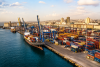
Last update: 7 hours agoPort & Logistics: DP World says it has finished dredging at Senegal’s Port of Ndayane 13 months early, clearing a 5-km navigation channel and berth pocket for the US$1.2B deep-water project that targets completion in 2028—an upgrade meant to boost Senegal’s role as a West African container gateway. Energy & Investment: The IEA reports Africa’s upstream oil and gas investment slid to $37B in 2025 (from $68B in 2016), with Algeria, Angola, Egypt, Nigeria and Libya driving most activity—raising questions for future exploration and financing. Digital Climate Services: Senegal is linked into a NiMet–AKADEMIYA2063 MoU to expand AI and climate/weather data analytics, aiming to strengthen climate information services for resilience and food security. Public Health Capacity: Africa-wide tobacco policy monitors met in Lagos for ATIM training, including Senegal participants, to better track and counter tobacco industry interference. Politics & Industry Environment: Senegal’s President Bassirou Diomaye Faye launched a new Kiiraay party, signaling shifting political dynamics that can affect business confidence and policy continuity. Regional Governance Data: ECOWAS pushed for reliable, harmonised statistics in Dakar to improve evidence-based planning across member states.
Note: AI summary from news headlines; neutral sources weighted more to help reduce bias in the result. Feedback is welcome. Please let us know if you have any comments or suggestions about the AGP Executive Report.

 Perspectify News